
You're looking at the EB-5 program and wondering exactly how much capital you need to commit. The numbers can feel confusing, especially with different thresholds for different project types.
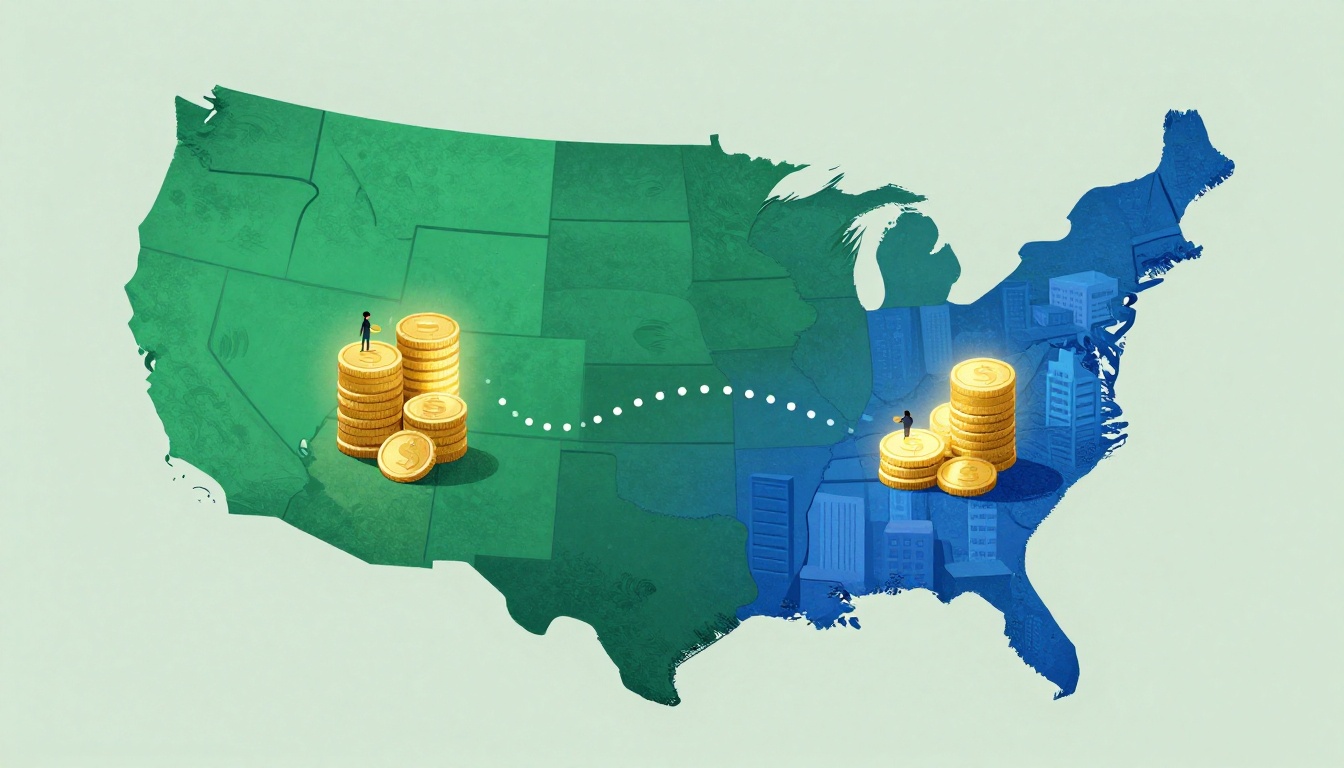
Let's cut through the noise. In 2025, the EB-5 minimum investment amounts are set by the EB-5 Reform and Integrity Act of 2022 (RIA). You'll need to invest either $800,000 or $1,050,000, depending on where your money goes.
What is the minimum EB-5 investment amount for a project in a Targeted Employment Area (TEA) in 2025?
Select one answer.
The two-tier investment structure
The lower threshold of $800,000 applies to investments in a Targeted Employment Area (TEA) or a qualifying infrastructure project. TEAs are either rural areas or regions with high unemployment. The standard amount of $1,050,000 applies to all other projects.
These amounts have been in effect since the RIA was passed in 2022. They replace the previous levels of $500,000 and $1,000,000.
Why the difference matters
Congress created this two-tier system to encourage investment in areas that need economic development. By investing in a TEA, you can qualify for the same green card benefits with $250,000 less capital.
But here's the catch: not every project qualifies as a TEA. You need to verify that the specific project you're considering meets the USCIS criteria.
What's changing in 2027
2025 is a critical year for planning. The RIA includes a grandfathering provision that protects investors who file their I-526E petition by September 30, 2026. After that date, new rules may apply.
Starting January 1, 2027, the minimum investment amounts will be adjusted for inflation for the first time. This means the $800,000 and $1,050,000 thresholds will likely increase.
Actionable steps for 2025
Here's what you should do right now:
- Confirm the project's TEA status. Ask for official documentation that proves the project is in a TEA. Don't rely on marketing claims.
- Budget for additional costs. The investment itself is just the beginning. You'll also need to cover legal fees, administrative fees, and USCIS filing fees.
- Check the job creation requirement. Regardless of the investment amount, you must create at least 10 full-time jobs for U.S. workers. This is non-negotiable.
- Plan your source of funds documentation. USCIS will scrutinize where your money came from. Start gathering tax returns, bank statements, and business records early.
- File before the grandfathering deadline. If you're serious about the EB-5 program, aim to submit your petition well before September 30, 2026.
Common questions about EB-5 investment amounts
Can I invest less than $800,000? No. The $800,000 figure is the absolute minimum under current law. There are no exceptions.
What happens if the investment amount changes after I file? If you file your petition before the new rules take effect, you'll be grandfathered under the old amounts. This is why acting now is so important.
Does the investment have to be in cash? You can use cash, equipment, inventory, or other tangible assets. But cash is the simplest and most common approach.
How the Immigration Attorney Can Help
Navigating the EB-5 investment thresholds requires more than just knowing the numbers. You need a legal strategy that protects your capital and maximizes your chances of approval. Kyle D. Mitchell, Esq. runs a boutique immigration law firm in New York City that specializes exclusively in EB-5 investor visas. With over 3,000 community members across multiple platforms and a track record of guiding investors through complex source-of-funds documentation, Kyle offers the personalized attention that large firms often can't provide. Schedule a consultation with Kyle D. Mitchell, Esq. to discuss your specific investment situation and build a filing plan that meets the 2025 requirements.