
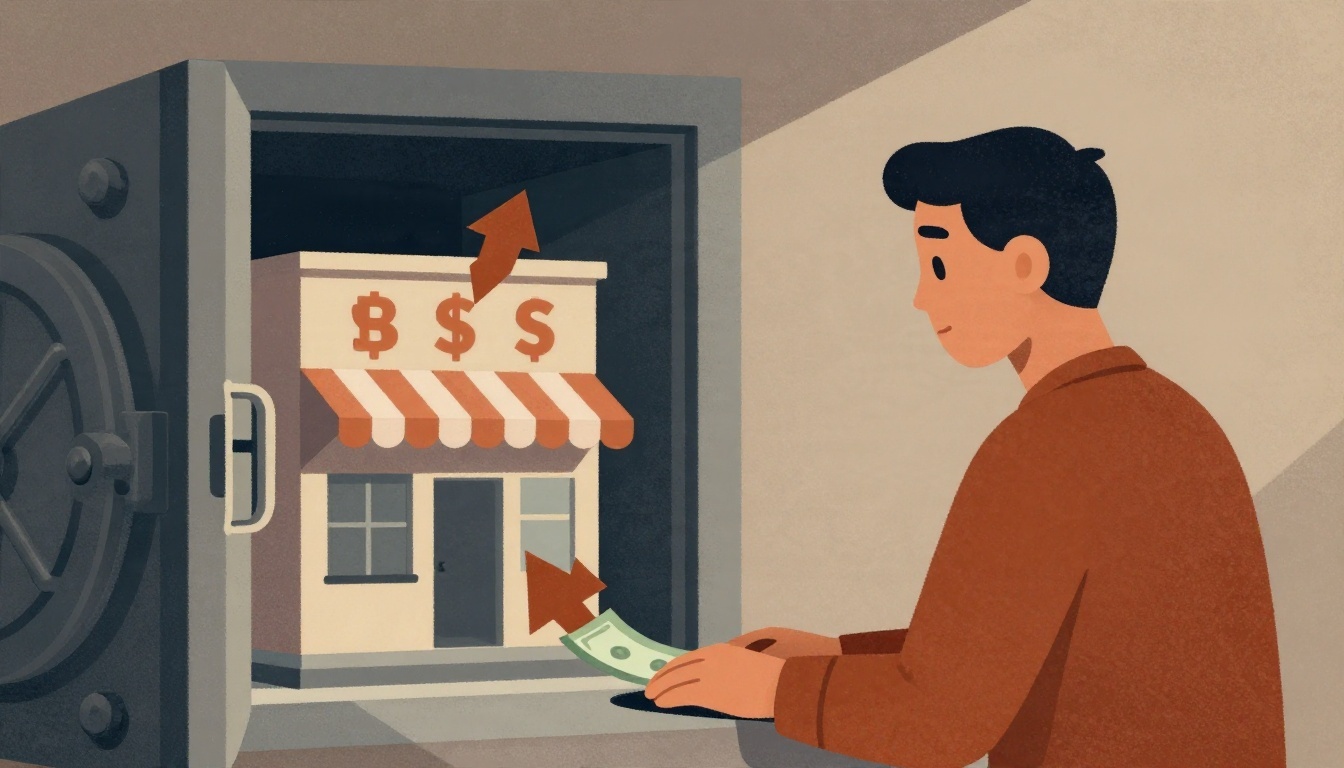
If your E-2 application was denied or you are worried it might be, the "at risk" requirement is one of the most common places investors get stuck. The problem is rarely that you lack money. It is that the money is not positioned in a way that shows it is genuinely committed to a U.S. business and could be lost if that business fails.
This guide explains what "at risk" and "irrevocably committed" mean in practice, how officers evaluate them, and the concrete steps you can take to document your investment properly.
What does the E-2 at-risk requirement mean for your investment funds?
Select one answer.
What the at-risk requirement actually means
The E-2 treaty investor visa requires that you have invested, or are actively in the process of investing, a substantial amount of capital in a bona fide U.S. enterprise. Under the regulations at 8 C.F.R. § 214.2(e)(2), the capital must already be invested or irrevocably committed to the business, and the commitment must be real and irrevocable.
The core idea is that investment means placing funds at risk in a commercial sense, in the hope of generating a financial return. If your money is not subject to partial or total loss when business fortunes reverse, it is not an investment for E-2 purposes.
There is no fixed dollar minimum in the statute. What matters is whether the amount is substantial relative to the cost of the specific business, and whether it is genuinely committed. As one practitioner summary puts it, the funds must be "already spent or contractually committed and at risk" (Prizant Law).
Why funds in a personal bank account fail the test
A frequent denial pattern is money that remains in a personal or corporate bank account with no binding commitment attached. Officers treat uncommitted funds in an account, or mere intent to invest, as insufficient. Prospective arrangements that carry no present commitment do not qualify either.
Denials also happen when the structure of the investment insulates you from loss. Examples include escrow arrangements that let you retrieve funds unilaterally, passive assets held purely for appreciation, or loans secured by the business's own assets rather than your personal capital (Viles Law Firm).
What counts as at-risk capital
At-risk money can include credit card, debit, or other loans, as long as the debts are not secured by business assets (Offit Kurman). What matters is that you bear genuine exposure.
Evidence that funds are at risk typically includes:
- Signed purchase agreements or franchise agreements with binding payment obligations
- Lease deposits and signed commercial leases
- Equipment invoices and paid supplier contracts
- Business bank account funding tied to specific operating expenses
- Escrow arrangements where release is triggered by a condition, not by your discretion
A purchase conditioned on visa issuance can still qualify as an irrevocable investment if the assets are held in escrow for release or transfer once the condition is met. The key is that you have entered a binding agreement and committed funds, not simply signed contracts that may be broken.
The irrevocable commitment standard
The Foreign Affairs Manual guides consular officers on this point: the investor must be actively in the process of investing, meaning close to the start of actual business operations. Signing preliminary contracts or scouting locations is not enough.
A delayed or partially spent investment does not automatically disqualify you, provided you can demonstrate an irrevocable commitment of capital (e2visalawyer.net). Construction timelines and sequential startup spending are common, and officers can accept them when the commitment is documented.
A practical checklist before you file
- Move funds into binding commitments. Convert idle cash into signed leases, equipment purchases, franchise fees, or other obligations tied to the business.
- Document the source of funds. Build a paper trail showing how you lawfully obtained the capital, including tax returns, bank statements, and proof of asset sales or gifts.
- Avoid structures that let you retrieve funds at will. If you use escrow, make release conditional on a defined event, not your own discretion.
- Do not rely on business-asset-secured loans. Use personal capital or unsecured borrowing so you carry the loss.
- Show proportionality. Demonstrate that the amount invested is substantial relative to the total cost of establishing or purchasing the business.
- Keep the business close to operating. A signed lease, business bank account, and purchased equipment help show you are actively in the process of investing.
Common mistakes to avoid
- Treating the E-2 as having a fixed dollar threshold instead of a proportionality test
- Leaving funds in a personal account and calling it an investment
- Using escrow terms that allow unilateral retrieval
- Investing in passive assets rather than an active enterprise
- Failing to document lawful source of funds
Each of these can undermine an otherwise strong case, and several are cited among the most frequent grounds for denial.
How the Featured Expert Can Help
Kyle D. Mitchell, Esq. runs a boutique immigration law firm in New York City specializing in EB-5 investor visas and removal defense. The firm offers detailed service descriptions and a consultation booking option, and maintains community engagement for over 1,000 verified members. If you need help structuring an investment to meet the at-risk and irrevocable commitment standards, you can book a consultation.
Test your understanding
Before you move any funds, make sure you can answer this: what does the E-2 at-risk requirement actually demand of your capital?
{"question":"What does the E-2 at-risk requirement mean for your investment funds?","options":["The funds must be irrevocably committed and subject to partial or total loss if the business fails","The funds must remain in a personal bank account until the visa is approved","The funds must be at least $500,000 regardless of the business type"],"correctIndex":0}